Hi, I’m Hororan!
Welcome back to Sake Atlas.
If you are a wine lover, you know the word “Terroir.” It’s the idea that the soil, the sunlight, and the climate of a specific region create a flavor that cannot be copied anywhere else. You can taste “Bordeaux” in a glass of Bordeaux.
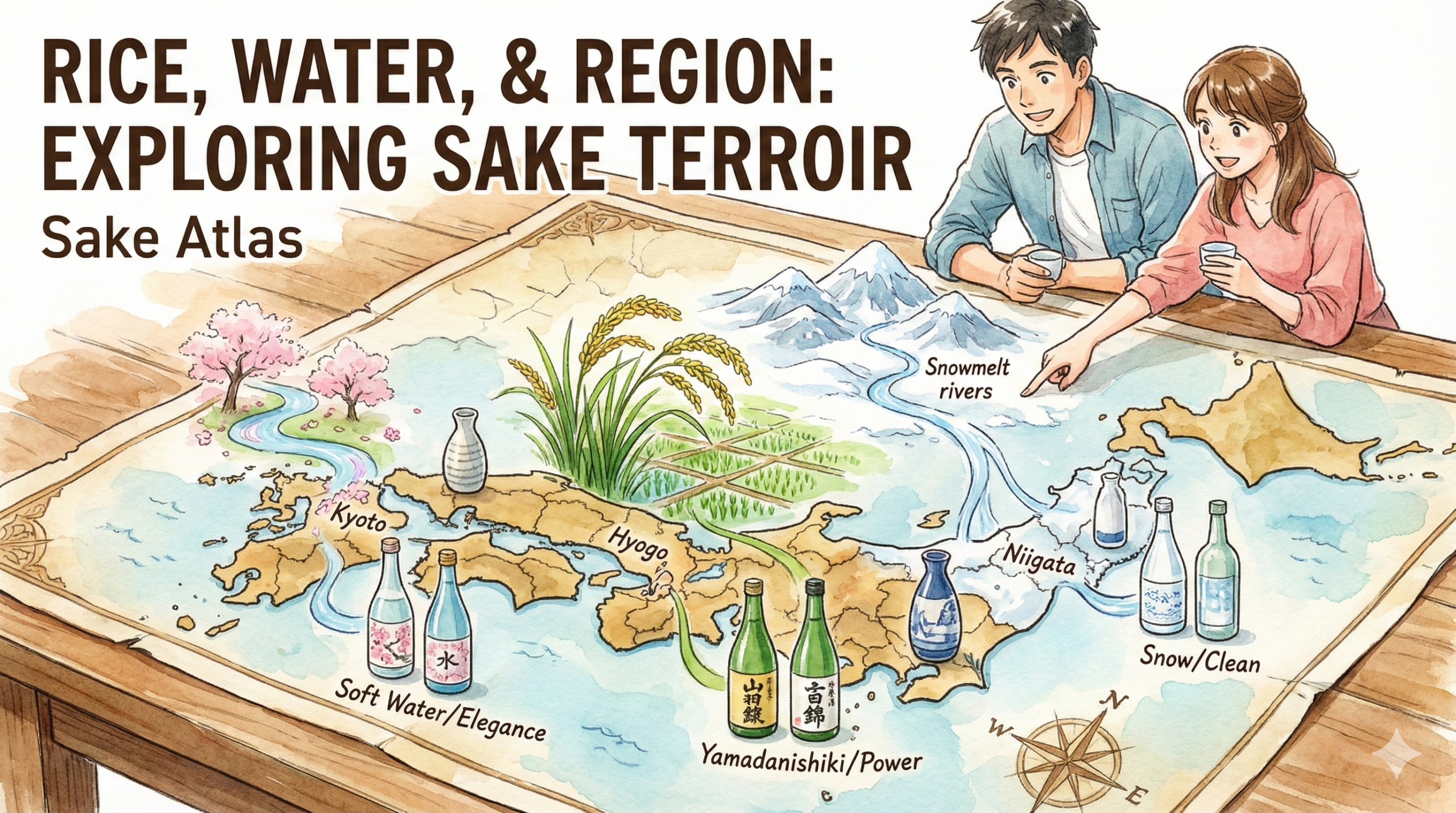
Does Sake have Terroir? For a long time, people said “No.” They thought technique was everything. But they were wrong. Japan is a long, narrow country with snowy mountains in the north and tropical heat in the south. Of course, the place matters.
Today, let’s taste the geography of Japan.

Who is this article for?
- Terroir Hunters: You love tasting the “place” in your glass.
- Water Snobs: You can taste the difference between Evian and Volvic.
- Travelers: You want to know which region to visit for your favorite style of sake.
1.The Water: Hard vs. Soft (The Soul of Sake)
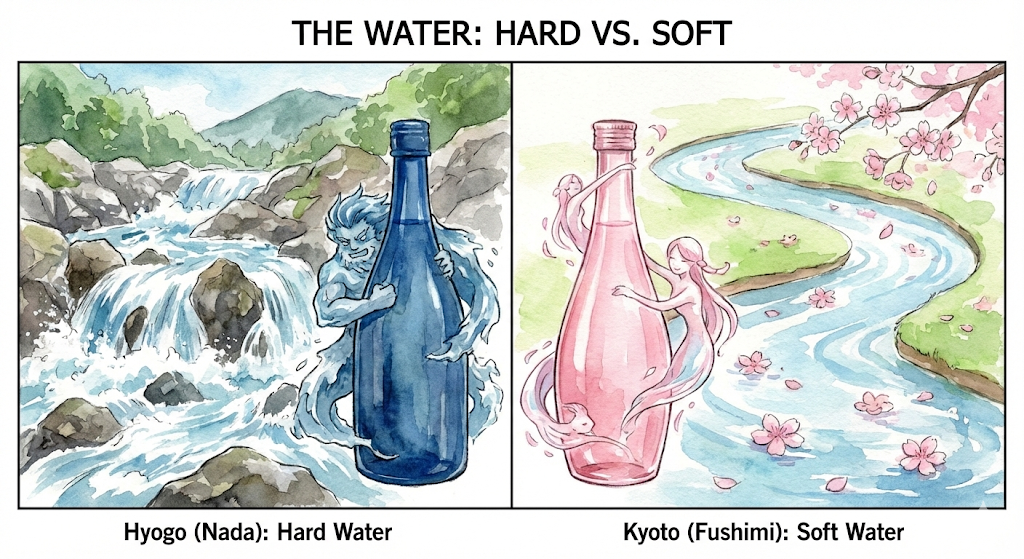
Sake is 80% water. The mineral content of that water defines the “skeleton” of the taste.
- Hard Water (Nada, Hyogo): The “Men’s Sake” The water in Nada (near Kobe) is rich in minerals like phosphorus and potassium. This feeds the yeast aggressively, resulting in a fast, strong fermentation. The sake becomes dry, sharp, and powerful. Historically, this was called “Men’s Sake” (Otoko-zake). If you like crisp, dry white wines, look for sake from Hyogo.
- Soft Water (Fushimi, Kyoto): The “Women’s Sake” In Kyoto, the water is incredibly soft. The fermentation is slow and gentle. The resulting sake is smooth, slightly sweet, and elegant. It is known as “Women’s Sake” (Onna-zake). If you prefer a silky, gentle mouthfeel, choose sake from Kyoto.
2.The Rice: The “Grapes” of Japan
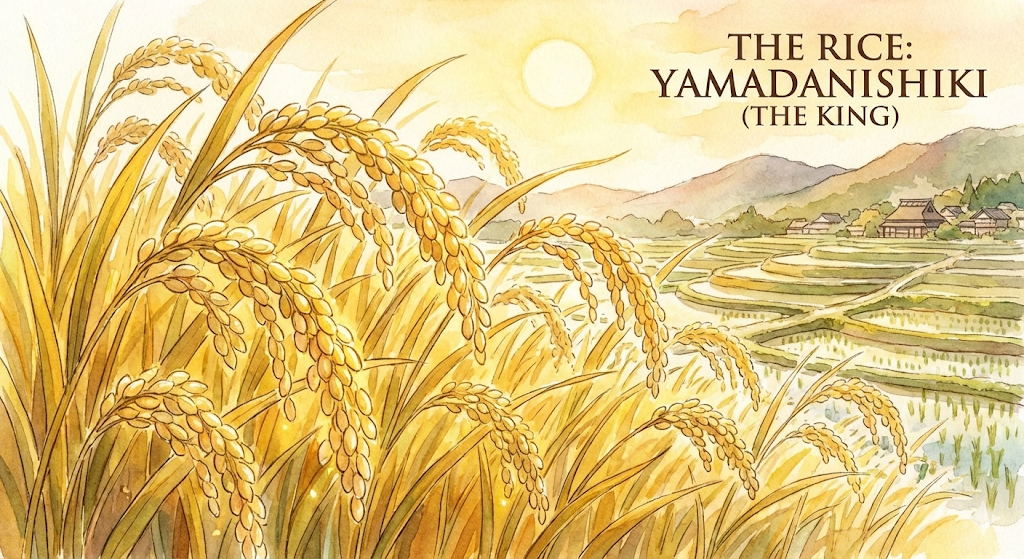
Just like wine has Cabernet and Pinot Noir, Sake has different rice varieties.
- Yamadanishiki (The King): Often compared to Cabernet Sauvignon. It grows mostly in Hyogo. It creates a complex, fragrant, and fruity sake with a long finish. It is the gold standard for Daiginjo.
- Gohyaku-mangoku (The Clean Prince): Grows in the snowy north (Niigata). It creates a light, airy, and super-clean taste. It is more like Sauvignon Blanc—refreshing and crisp.
3.The Climate: The Power of Snow
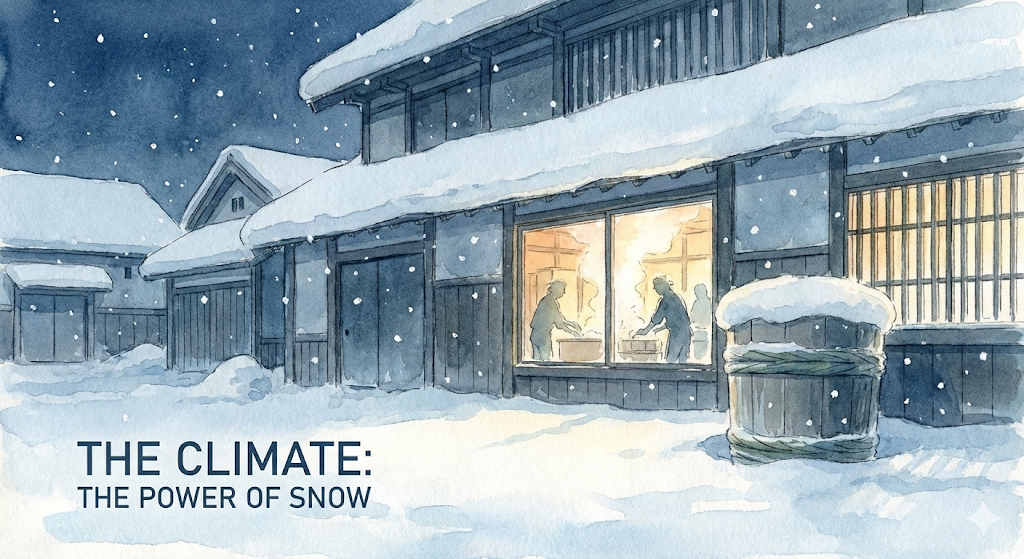
Why is the north of Japan (Niigata, Tohoku) so famous for Sake? The answer is Snow.
Sake brewing happens in winter. In the snowy north, the temperature is naturally stable and freezing cold. This allows brewers to ferment the sake at very low temperatures for a long time.
The result: The “Ginjo” aroma (fruity smell) is trapped inside the liquid, and the bacteria cannot survive. This creates the “Clean & Crisp” (Tanrei-Karakuchi) style that defined modern sake.
Conclusion: Drink the Map
Next time you look at a Sake menu, don’t just look at the price. Look at the Region (Prefecture).
- Want power? Go to Hyogo.
- Want elegance? Go to Kyoto.
- Want pure snow water? Go to Niigata.
The whole country is waiting in your glass.