Hi, I’m Hororan!
Welcome back to Sake Atlas.
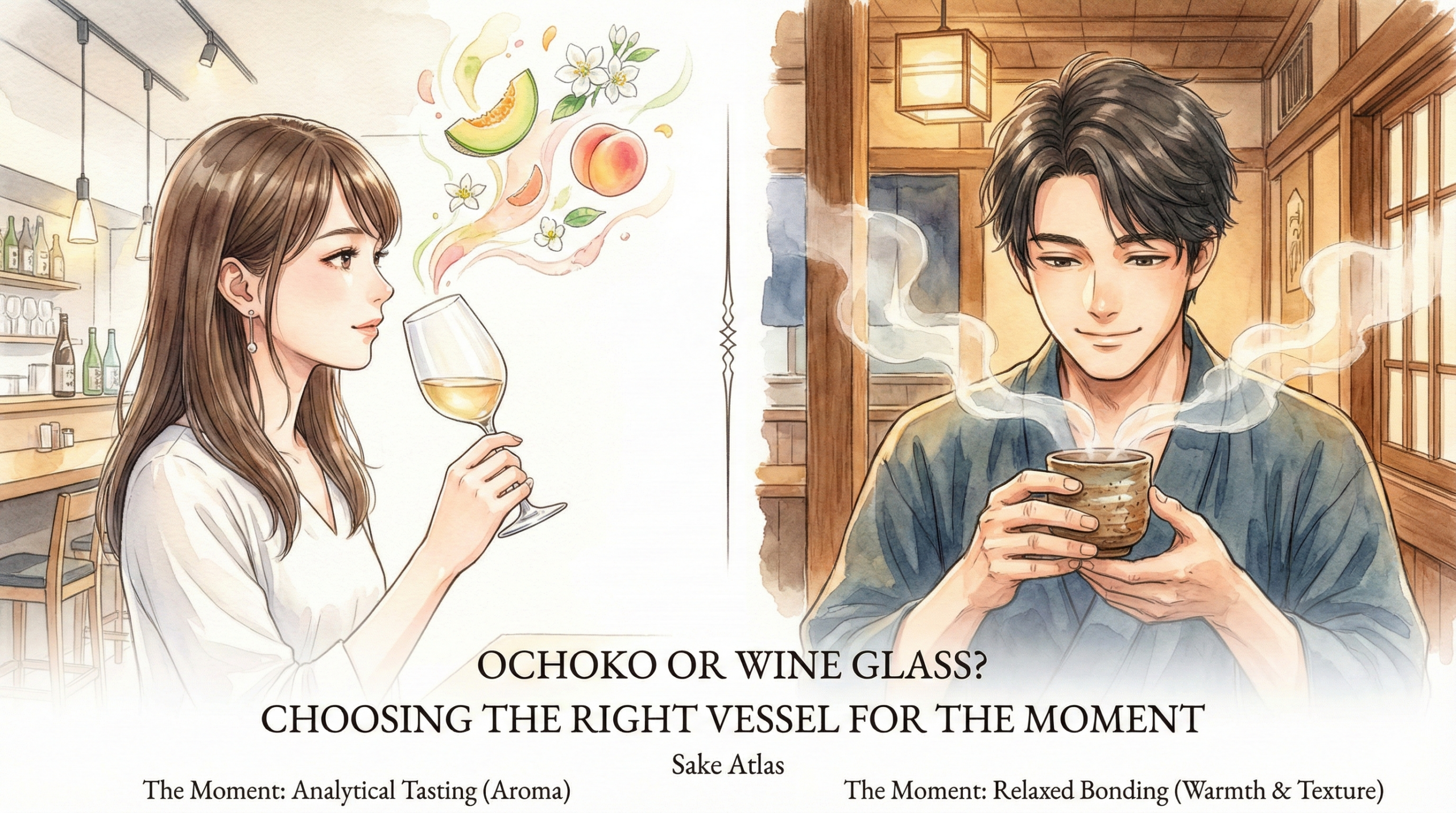
If you go to a traditional Sushi bar, you get a tiny ceramic cup. If you go to a modern fusion restaurant, you get a wine glass. Which one is correct?
As a wine lover, you know that the shape of the glass changes the taste of the wine. The same is true for Sake. But in Japan, we don’t just choose the vessel for the flavor. We choose it for the feeling and the moment.
Today, let’s elevate your home drinking game by mastering the art of Sake vessels.

Who is this article for?
- Glassware Geeks: You own specific glasses for Bordeaux and Burgundy and want to apply that knowledge to sake.
- Design Lovers: You appreciate beautiful pottery and want to know when to use traditional Japanese crafts.
- Home Bartenders: You want to upgrade your “taku-nomi” (home drinking) style with the perfect presentation.
For Aroma: Use a Wine Glass
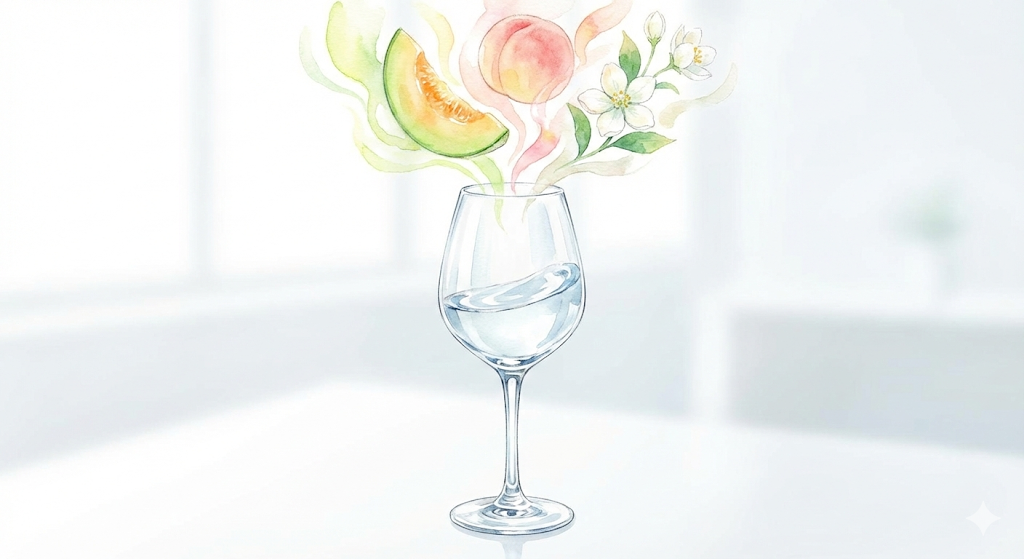
If you are drinking a premium Daiginjo or Ginjo (the fruity, floral types), forget the traditional cups. Use a white wine glass.
Why? Traditional small cups are too wide and open. The delicate aromas of melon, apple, and white flowers escape instantly.
A tulip-shaped wine glass traps the scent and directs it straight to your nose.
In modern Japan, many breweries design their finest Daiginjo specifically to be enjoyed from a wine glass. Don’t feel guilty about swirling your sake!
For Texture & Warmth: Use Ceramic (Ochoko / Guinomi)
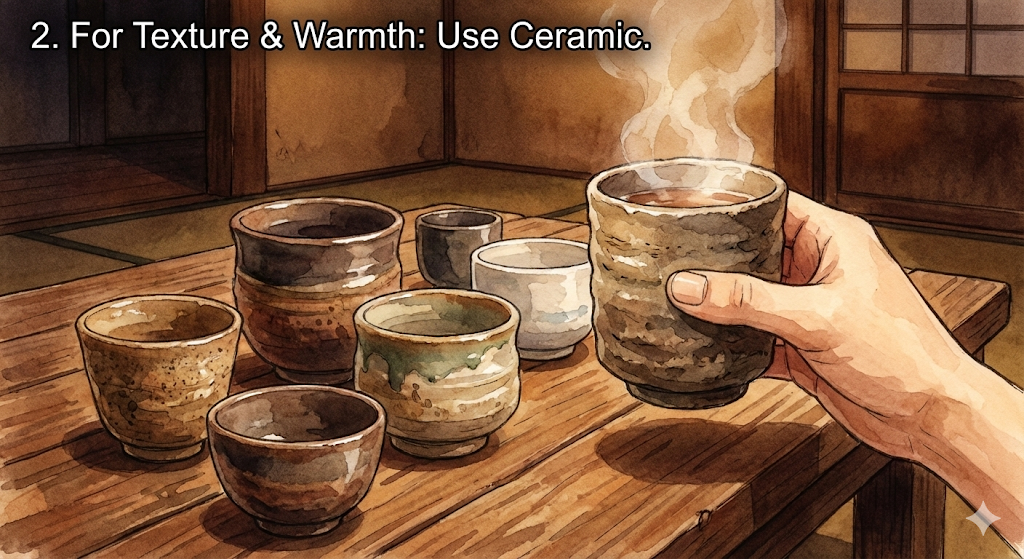
If you are drinking a rich Junmai, a funky Yamahai, or Hot Sake, glass can feel too cold and “sharp” on the lips. You need Ceramic (Pottery).
Why?
- Softening: The thick, rounded rim of a handmade clay cup softens the acidity and makes the sake taste mellower and rounder.
- Temperature & Touch: Clay holds heat beautifully. For hot sake, holding a warm ceramic cup in your hands is half the pleasure. The earthy texture connects you to the rustic roots of the drink.
Pro Tip: Look for “Tin” (Suzu) cups. Tin is highly conductive and is said to purify the water, making the sake taste incredibly smooth.
The “Social” Secret: Why is the Cup So Small?

The standard traditional sake cup (Ochoko) holds only about 45ml (1.5 oz). You finish it in one sip. Ideally, this seems annoying, right?
Actually, that is the point. In Japanese culture, there is a custom called “Oshaku” (お酌)—pouring drinks for others.
- Large Glass: You pour once, and then ignore each other for 30 minutes while you drink.
- Tiny Cup: You must refill each other’s cup every few minutes.
This creates constant interaction, eye contact, and acts of care. The tiny cup is not just a vessel for alcohol; it is a device for bonding and communication.
Conclusion: Match the Vessel to the Vibe
You don’t need to follow the rules strictly. The “right” vessel is the one that fits the mood of the night.
- Want to analyze the aroma like a connoisseur? Grab a Riedel.
- Want to relax and bond with a friend on a cold night? Grab a Ceramic Cup.
Choose your weapon, and enjoy the moment.