Hi, I’m Hororan!
Welcome back to Sake Atlas. I’m your navigator through the complex and beautiful world of Japanese Sake.
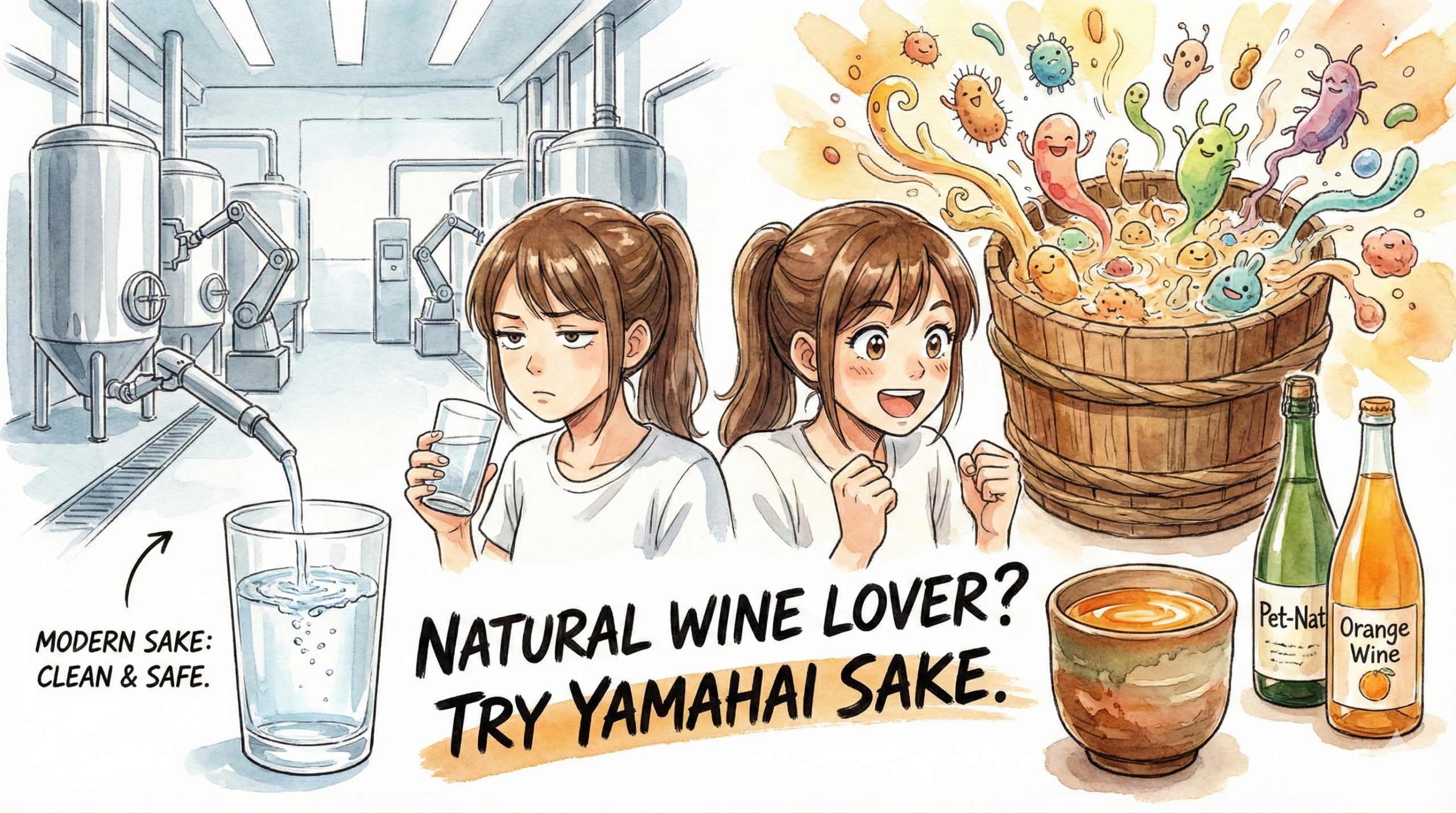
Today, I want to talk to the rebels. The people who think standard wine is “boring.” If you are the kind of person who hunts for cloudy Pet-Nats, orange wines, or sour beers, this article is dedicated to you.
I’m going to introduce you to the “funkier” side of Sake.

Who is this article for?
- Natural Wine Lovers: You love “funky,” “earthy,” or “wild” flavors in your glass.
- Bored Drinkers: You find standard Sake too clean or “water-like” and want something with more punch.
- Foodies: You love rich foods like blue cheese, game meat, or cream sauces and need a drink that can fight back.
The “Clean” Trap
Let me guess your impression of Sake. “It’s clean. It’s smooth. It tastes like… very nice water.”
You aren’t wrong. For the last few decades, the Sake industry has perfected the art of making “clean” sake (mostly Ginjo styles).
To achieve this, brewers use modern technology to eliminate bacteria and control every variable. It’s pure, precise, and beautiful.
But sometimes, “clean” is boring.
If you crave the unpredictability of a wild-fermented natural wine, standard sake might feel a bit too polite for you. You need something wilder. You need Yamahai (山廃).
1.The Survival Game: How Yamahai is Made
To understand the taste, you have to understand the story. It’s a story of survival.
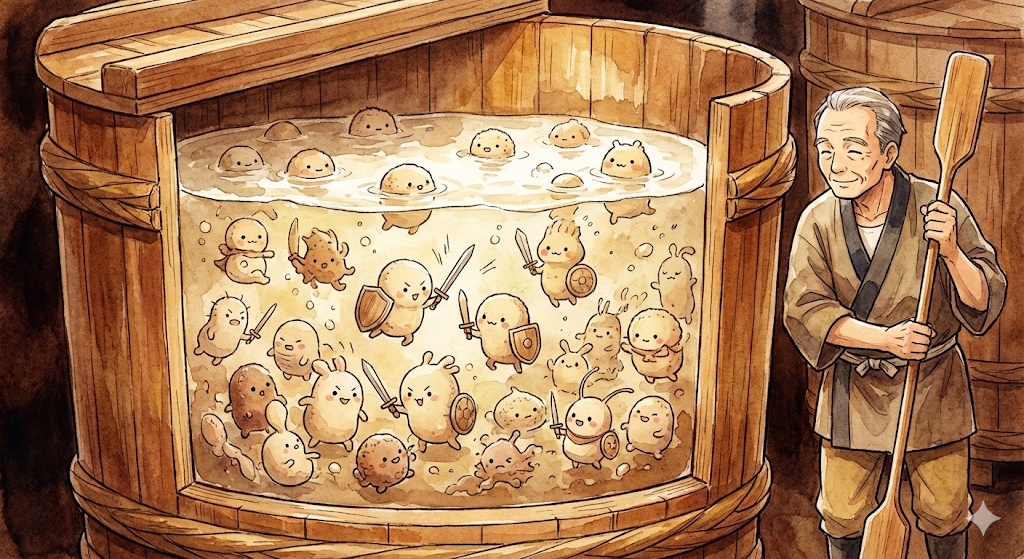
To make alcohol, yeast needs a safe environment. In modern sake brewing (called Sokujo), brewers add artificial lactic acid to the tank to kill off bad bacteria instantly. It’s safe, fast, and makes clean sake.
Yamahai is different. In the Yamahai method (and its brother, Kimoto), brewers add nothing. They just wait. They let wild lactic acid bacteria from the air fall into the tank.
It is a battle royale inside the barrel. Wild bacteria fight for dominance, creating a chaotic, natural environment. Eventually, the lactic acid builds up naturally, protecting the yeast.
This process takes twice as long as modern methods and is incredibly risky. If the brewer blinks, the whole tank rots.
But the yeast that survives this “survival game” is strong. And that strength translates into flavor.
2.The Taste: Funky, Earthy, and Alive
So, what does “survival” taste like? It doesn’t taste like apples or melons.
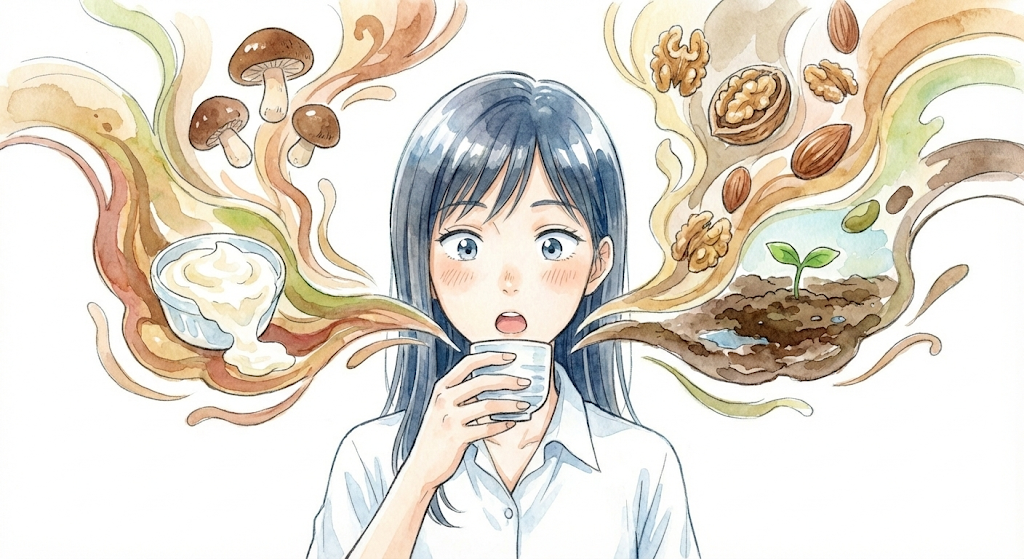
Yamahai tastes like the earth. It is complex, rich, and deeply acidic. When you drink it, you might find notes of:
- Yogurt or sour cream (from the natural lactic acid)
- Mushrooms or damp earth
- Nuts and cereal
- A pleasant “funk” or gaminess
It has a higher acidity than standard sake, which makes your mouth water. For a natural wine lover, this profile is familiar. It’s that same beautiful, controlled chaos you find in a bottle of unfiltered orange wine.
3.The Pairing: It Loves Heavy Food
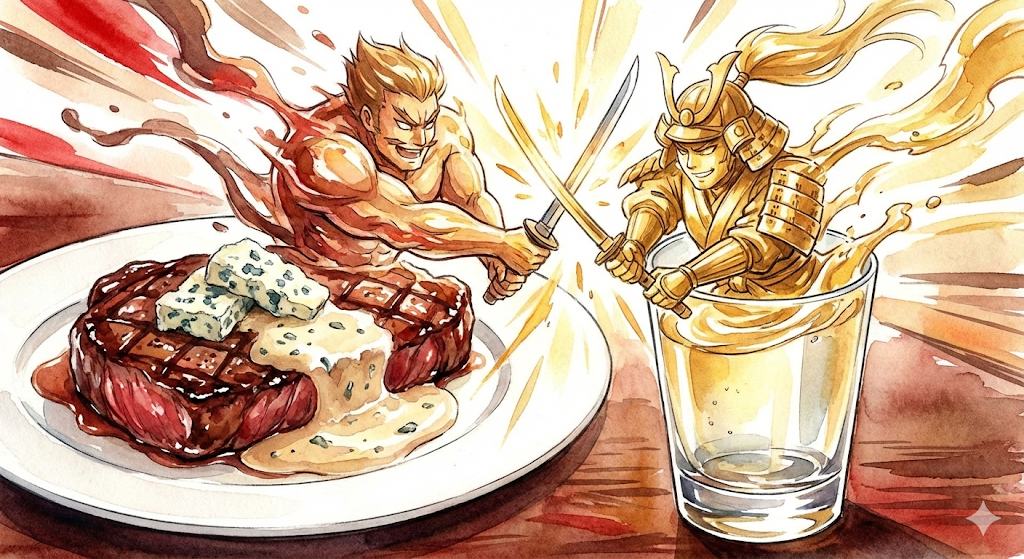
Standard clean sake is shy. If you pair it with a heavy steak or blue cheese, the food will crush the flavor of the sake.
Yamahai fights back. Because of its high acidity and rich “Umami,” Yamahai is a beast with food. It cuts through fat and oil like a knife.
Try pairing Yamahai with:
- Cheese: Comté, Blue Cheese, or anything aged.
- Meat: Lamb chops, roasted duck, or a juicy burger.
- Rich Sauces: Cream stews, Carbonara, or Bolognese.
Conclusion: Find the Kanji
Next time you are in a shop, ignore the pretty, floral bottles. Look for the rugged, traditional labels. Look for these Kanji characters: 山廃 (Yamahai) or 生酛 (Kimoto).
It might not be “clean.” It might be a little weird. But for someone who loves the taste of nature, it will be the best glass of sake you’ve ever had.
Welcome to the wild side.