Hi, I’m Hororan!
Welcome to Sake Atlas. I’m your guide to the deep and delicious world of Japanese Sake.
As a Sake enthusiast living in Japan, I often see travelers staring at Izakaya menus with a look of total confusion. It’s a tragedy! You traveled thousands of miles to taste authentic Sake, but the language barrier is blocking your glass.
But here is the good news: you don’t need to learn Japanese to understand Sake. You just need to trust your own tongue. Today, I will help you find your perfect bottle using a language you already speak fluently—the language of Wine.

Who is this article for?
- Wine Lovers: You know your Chardonnay from your Merlot, but feel lost with Sake.
- Travelers in Japan: You struggle to order at Izakayas because the menu is full of Kanji.
- Curious Drinkers: You want to stop ordering generic “House Sake” and find a bottle that matches your personal taste.
The “Menu Panic”
Imagine this: You walk into an authentic Japanese restaurant. The atmosphere is perfect, and you’re ready for a great meal. But then, you open the drink menu.
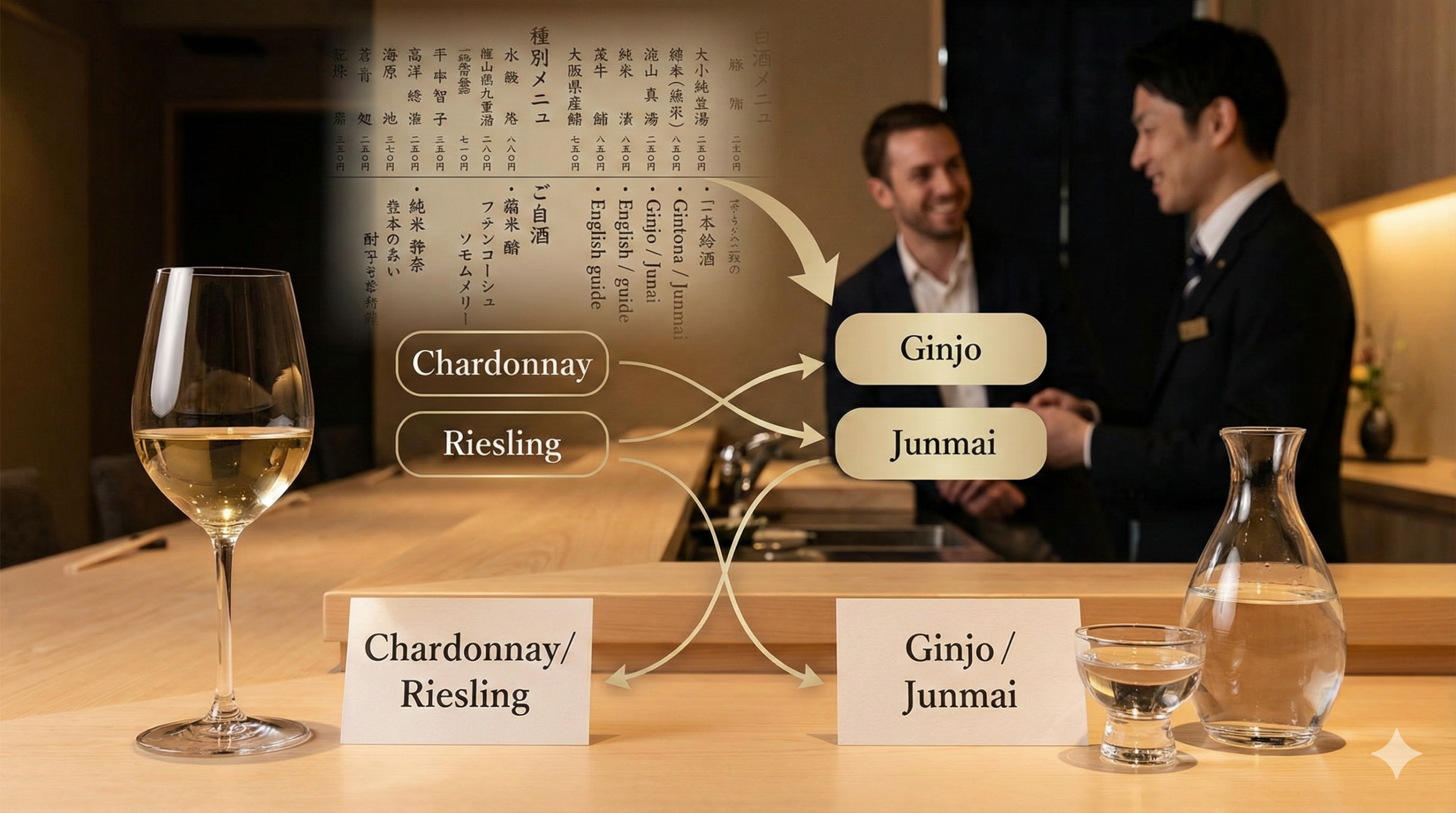
Instead of familiar grapes like Chardonnay or Merlot, you are stared down by a wall of unfamiliar Kanji characters and terms like Junmai-Daiginjo or Tokubetsu-Honjozo. You freeze.
You have no idea what any of these taste like. In the end, you panic and just order a beer or the “House Sake.”
Sound familiar?
Here is the secret: You don’t need to read Kanji to pick a great Sake. You just need to translate your wine preferences into Sake terms.
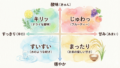
Sake experts generally classify flavors into four categories. By matching these to the wines you already love, you can navigate any menu like a pro.
1. If you like Sauvignon Blanc or Riesling…
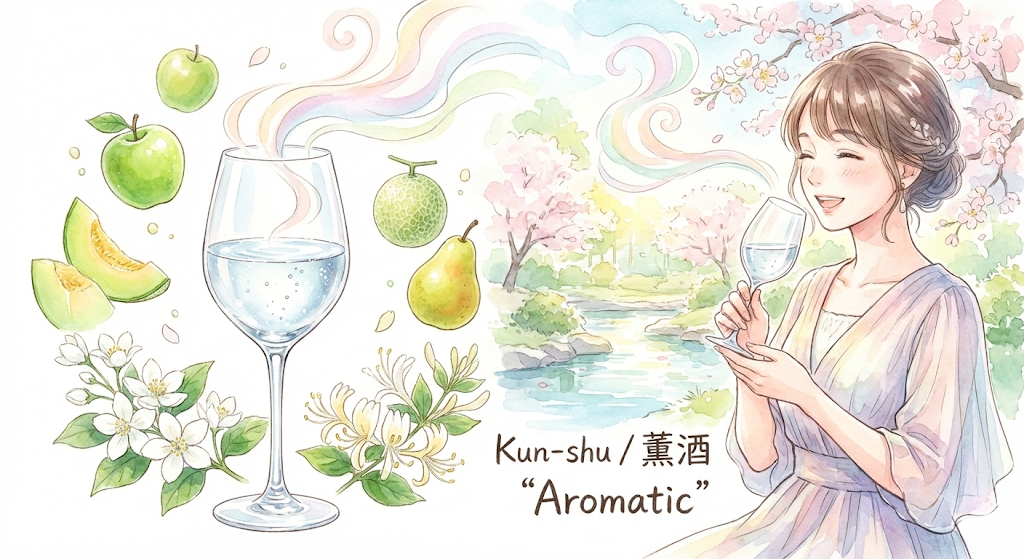
Look for: The “Aromatic” Type (Kun-shu / 薫酒)
This is the most popular style for modern sake drinkers.
These sakes are highly fragrant, often smelling like apples, melons, pears, or white flowers. They are elegant, fruity, and smooth.
- The Vibe: Elegant and uplifting.
- Keywords on the Menu: Look for “Ginjo” (吟醸) or “Daiginjo” (大吟醸).
- Pairing: Perfect as an aperitif or with light appetizers like carpaccio, white fish sashimi, or salads with citrus dressing.
2. If you like Pinot Grigio or Dry Champagne…
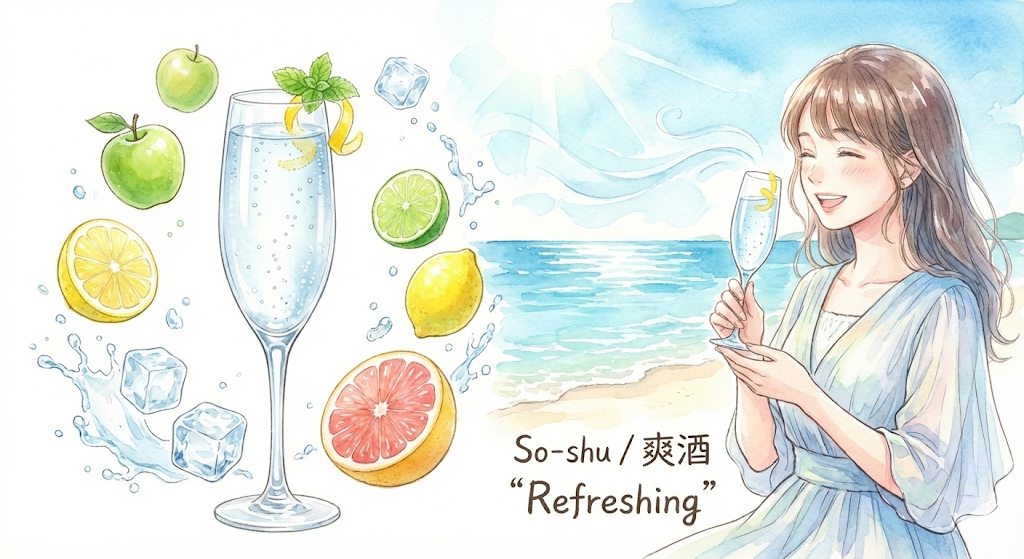
Look for: The “Refreshing” Type (So-shu / 爽酒)
You want something crisp, clean, and dry? This is your category. These sakes are light on the tongue and finish with a sharp snap.
They act as a palate cleanser, washing away oil and fat, making you ready for the next bite.
- The Vibe: Crisp and dry.
- Keywords on the Menu: Look for “Karakuchi” (辛口) which means “Dry,” or “Honjozo” (本醸造).
- Pairing: This is the ultimate versatile player. It goes with almost anything, from tofu and sashimi to fried dishes like Tempura.
3. If you like Oaked Chardonnay, Pinot Noir, or Natural Wine…
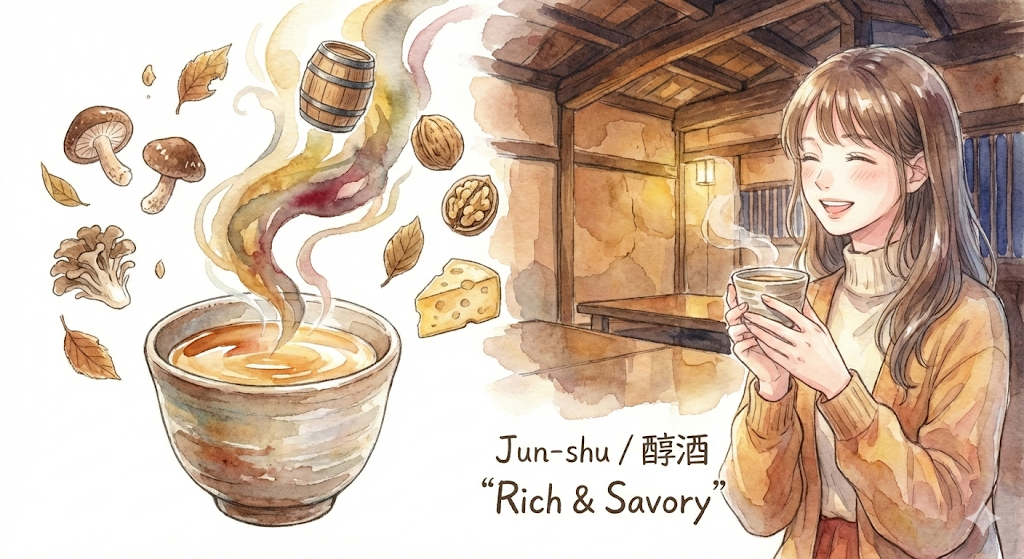
Look for: The “Rich & Savory” Type (Jun-shu / 醇酒)
Attention, craft beer and natural wine lovers: This is likely your favorite category. Unlike the fruity “Ginjo” style, these sakes focus on the flavor of the rice itself.
They are full-bodied, rich in Umami, and have a complex, earthy acidity. They feel heavier in the mouth, similar to a red wine.
- The Vibe: Deep, earthy, and savory (Umami).
- Keywords on the Menu: Look for “Junmai” (純米), “Kimoto” (生酛), or “Yamahai” (山廃).
- Pairing: These powerful sakes can stand up to heavy dishes. Try them with meat dishes, cheese, cream sauces, or anything with butter.
4. If you like Sherry, Port, or Madeira…
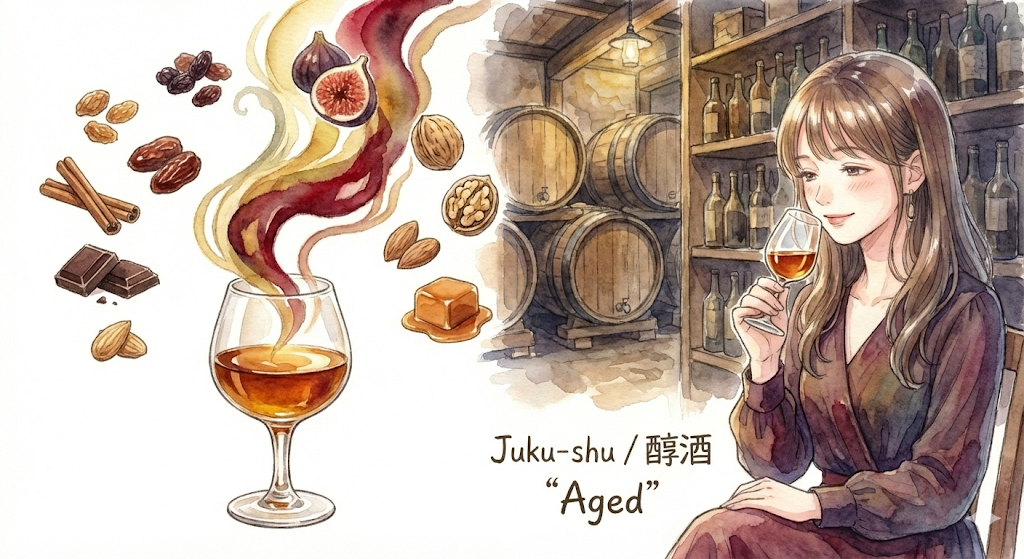
Look for: The “Aged” Type (Juku-shu / 熟酒)
This is the rarest category and arguably the most surprising. Just like whiskey or wine, Sake can be aged.
The color turns golden or amber, and the flavor transforms into notes of dried fruit, nuts, caramel, and spices. It tastes nothing like the clear “rice wine” you imagine.
- The Vibe: Complex, intense, and nutty.
- Keywords on the Menu: Look for “Koshu” (古酒) or “Aged Sake”.
- Pairing: Treat it like a dessert wine or a digestif. It pairs beautifully with blue cheese, dark chocolate, or dried fruits.
The Cheat Sheet
Next time you are at a restaurant, don’t worry about the jargon. Just tell the sommelier or staff what kind of body you are in the mood for:
- “I usually drink aromatic white wines. Do you have a Ginjo?”
- “I love natural wines with a lot of body. Do you have a rich Junmai?”
Your palate is already trained; it just needed a map. Welcome to the world of Sake.